
How Capex Life Assurance Company Limited Is Strengthening Pension Solutions for Individuals and Employers.
Retirement planning in Kenya is becoming an increasingly important conversation as the country works toward strengthening financial security for its citizens.
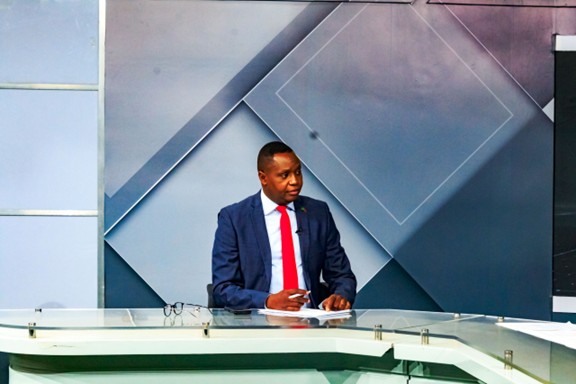
It was against this backdrop that Head of Retirement Benefits at Capex Life Assurance Wilson Malaba, led a conversation on KBC Business Check unpacking how Kenya’s pension system works and why more individuals and employers need to actively engage with it.
According to data from the Retirement Benefits Authority, the pension sector currently has a penetration rate of about 26 percent, with retirement assets estimated at roughly Ksh 2.8 trillion.
“When you look at the statistics provided by the Retirement Benefits Authority, you realize the sector is growing, but we still have a lot of work to do in terms of coverage, especially for people in both the formal and informal sectors,” Malaba said.
While these figures show significant growth in savings, they also highlight the reality that a large portion of Kenyans are still outside formal retirement systems. Expanding awareness and participation has therefore become a central focus for both regulators and financial institutions.
Within this evolving retirement landscape, Capex Life Assurance provides a range of pension and retirement services designed to help individuals and organizations plan for long-term financial security.
Before reforms, NSSF operated primarily as a provident fund. Under that system, workers made fixed monthly contributions, and upon reaching retirement often at age fifty for early retirement or sixty for normal retirement, they received their accumulated savings and interest as a single lump-sum payment.
The reformed pension system introduced a two-tier contribution structure under the NSSF Act 2013. Both employers and employees contribute 6% each, making a combined contribution of 12% of pensionable earnings. These contributions are divided into Tier I and Tier II, with Tier I being mandatory and paid directly to the National Social Security Fund. Tier II contributions, however, provide a degree of flexibility. Employers can remit them to NSSF or contract them out to a private retirement benefits scheme approved by the regulator. According to Malaba, this flexibility allows organizations to align retirement savings structures with broader financial planning strategies.
“The Act allows employers to contract out Tier II contributions to an approved scheme, provided that scheme meets the reference scheme test set by the regulator,” he noted. “This ensures that even when funds are managed outside NSSF, the benefits and protections for employees remain intact.”
The contribution limits themselves are structured around defined earning thresholds. The current lower earnings limit stands at Ksh 9,000, while the upper earnings limit is Ksh 108,000. Contributions are calculated within this band, and once earnings exceed the upper limit, contributions are capped. This means that the maximum combined monthly contribution currently stands at Ksh 12,960, and anyone earning above Ksh 108,000 contributes the same capped amount.

“When we talk about contributions, we are essentially saying that both the employee and the employer are taking responsibility for the individual’s future. Six percent from each side creates a twelve percent retirement saving, which builds a meaningful retirement basket over time,” he said.
For employers who prefer to manage retirement savings through a private pension structure, the law provides a clear mechanism known as contracting out. This allows Tier II contributions to be directed to a registered retirement benefits scheme instead of NSSF. However, the process is regulated to protect members’ savings. Employers must submit a written application to the Retirement Benefits Authority at least sixty days before the change takes effect. The regulator then evaluates whether the proposed scheme meets the reference scheme test, ensuring it complies with the legal requirements set out in the NSSF Act and retirement benefits regulations. Employees must also be formally notified of the intended change before contributions can begin flowing to the alternative scheme.
Within this regulatory environment, Capex Life has developed retirement solutions that serve different categories of workers and organizations. The company offers individual retirement plans for people who may not have employer-sponsored pensions, umbrella retirement schemes for smaller companies, and occupational administration services for large institutions. In addition, it provides post-retirement income options, including annuities and income drawdown funds that allow retirees to convert their accumulated savings into steady income.
Malaba emphasized that accessibility and transparency are central to how modern pension schemes operate.
“Members today want visibility over their savings. They want to see their contributions, understand how the funds are invested and know what they can expect when they retire. That level of transparency is essential in building trust in the pension system,” he said.

Beyond the policies, calculations and regulations lies a much more human reality. Retirement planning ultimately determines how people will live after decades of work.
“Retirement should not be a time when someone suddenly becomes financially uncertain after working for many years. The goal of these systems is to ensure that when people retire, they continue to receive income that allows them to live with dignity and stability,” said Malaba.
Ultimately the evolving pension landscape is not just about legislation or policy reform. It is about access to the right expertise, systems and guidance. With tailored retirement schemes, post-retirement income solutions and a growing commitment to transparency and member support, Capex Life continues to position itself as a partner for those seeking to secure their financial future long before retirement arrives.
By Gene K. Gituku